

News: Researchers Enhance Crop Growth and Resilience by Modifying Key Plant Protein in Poplar.
Updated: Sep 8, 2025
Published 12:00 AM EST, Fri Sep 05, 2025
Meng Xie, a lead biologist involved in the research, emphasized the importance of iron for photosynthesis, noting that a more in-depth understanding of plant genetics can lead to the development of bioenergy crops capable of thriving in iron-deficient soils.
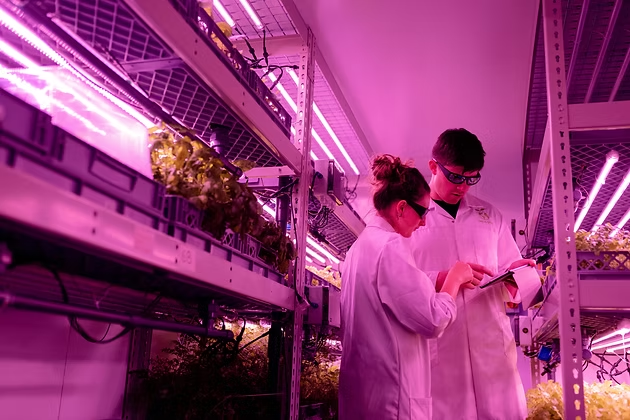
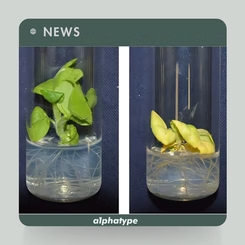
Researchers at the U.S. Department of Energy’s Brookhaven National Laboratory have identified a key plant protein, PtrbHLH011, that plays a central role in growth, nutrient uptake, and resilience in poplar. By knocking out the gene responsible for this protein, the team observed surprising outcomes: faster plant growth, doubled lignin production, and a threefold increase in iron accumulation in the leaves. These plants also produced higher levels of flavonoids, compounds that strengthen plant defenses and overall health.
The study revealed that increased lignin, typically a growth inhibitor, actually worked in tandem with higher iron uptake to enhance biomass yield. The boosted iron supported photosynthesis, which in turn provided more energy to fuel both growth and lignin synthesis. This demonstrates a novel pathway by which genetic modifications can improve crop productivity while maintaining resilience against environmental stresses and disease.
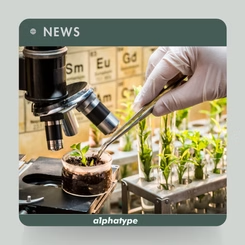
Using advanced gene expression and imaging technologies, the researchers gained deep insights into how altering a single protein can impact cell wall composition, nutrient balance, and environmental adaptability. Their findings point toward new strategies for engineering bioenergy crops that can thrive in nutrient-poor soils, provide higher biomass output, and resist pathogens more effectively. This research advances the broader mission of creating sustainable plant-based feedstocks for renewable energy and materials.
For the cannabis industry, these insights into lignin biosynthesis, nutrient efficiency, and stress resilience are directly relevant. Breeders aiming to improve cannabis cultivars could apply similar approaches, modulating specific regulatory proteins to balance structural strength, disease resistance, and nutrient uptake. Enhanced iron efficiency and flavonoid production, for example, could translate into stronger, healthier cannabis plants with improved resilience to environmental stress, ultimately supporting more consistent yields and higher-quality biomass for both flower and extract markets.
Source: SSBCrack News