

News: Researchers Launch U.S. Trials Testing Biosolid Fertilizers on Hemp.
Published 6AM EST, Fri Dec 12, 2025
Researchers in Illinois may have found a sustainable new way to supercharge hemp growth — using nutrient-rich biosolids from wastewater. Early results show hemp grown with biosolids shooting up taller and thicker than conventional plots.
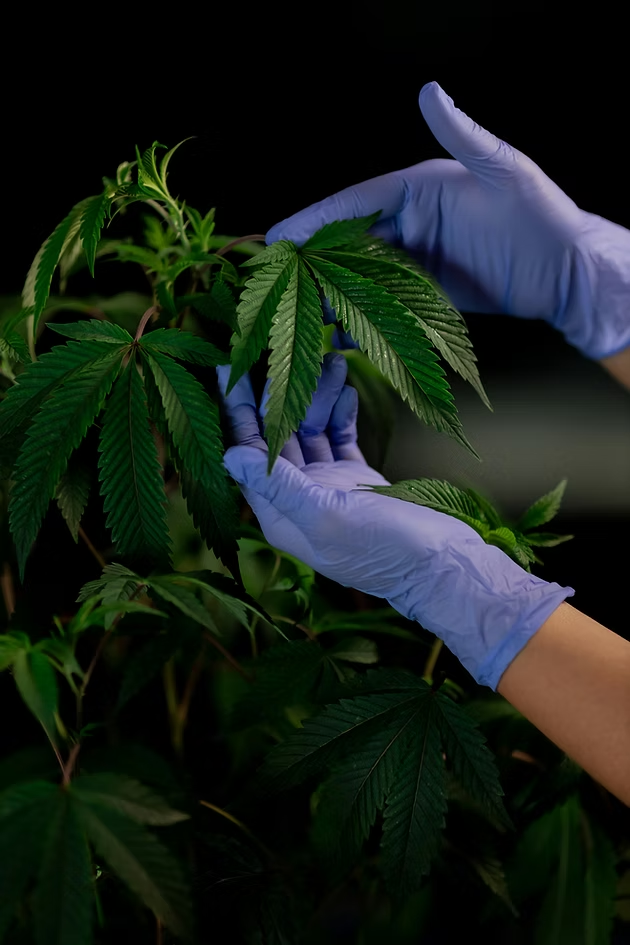
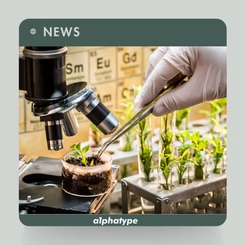
Researchers at the University of Illinois Urbana-Champaign have launched the first U.S.-based study evaluating biosolids-nutrient-rich organic materials from wastewater treatment as a fertilizer for industrial hemp. In collaboration with the Metropolitan Water Reclamation District of Greater Chicago (MWRD) and hemp-technology firm Flura, Inc., the project aims to determine whether biosolids can reliably boost hemp production while supporting more sustainable agricultural practices.
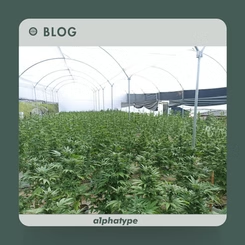
The team’s initial field trial used proprietary Flura hemp genetics and Class A biosolids on 1/8-acre plots, with conventional urea fertilizer serving as a control. Early observations from the first harvest showed that hemp treated with biosolids grew taller and developed thicker stalks than control plants, suggesting potential improvements in fiber yield and overall crop performance. Researchers plan to repeat the trial in 2026 to validate findings and prepare the study for scientific publication.
According to principal investigator Dr. D.K. Lee, hemp’s nutrient needs vary depending on its end use—fiber, grain, or dual-purpose, but sustainable nutrient management remains essential. The study is designed to explore how biosolids may fulfill these nutrient requirements while enhancing soil health over time. Flura leadership emphasizes that the project also examines how EPA-approved biosolids can contribute to broader sustainable farming models across the country.
If biosolids prove effective for industrial hemp production, the findings could influence nutrient management strategies across the wider cannabis sector, including both fiber-focused and cannabinoid-focused cultivation. As growers face rising fertilizer costs, sustainability pressures, and regulatory scrutiny over environmental impact, biosolids may offer a cost-effective and eco-friendly alternative. Demonstrating their safety and efficacy in hemp, a federally legal crop often used as a research proxy, could pave the way for more sustainable inputs in cannabis cultivation, potentially improving soil health, reducing reliance on synthetic fertilizers, and aligning the industry with emerging environmental standards.
Source: Ganjapreneur