


.
- Nov 27, 2025
- 7 min read
Published 1PMEST, Thurs Nov 27, 2025
Direct Organogenesis: The Complementary Approach
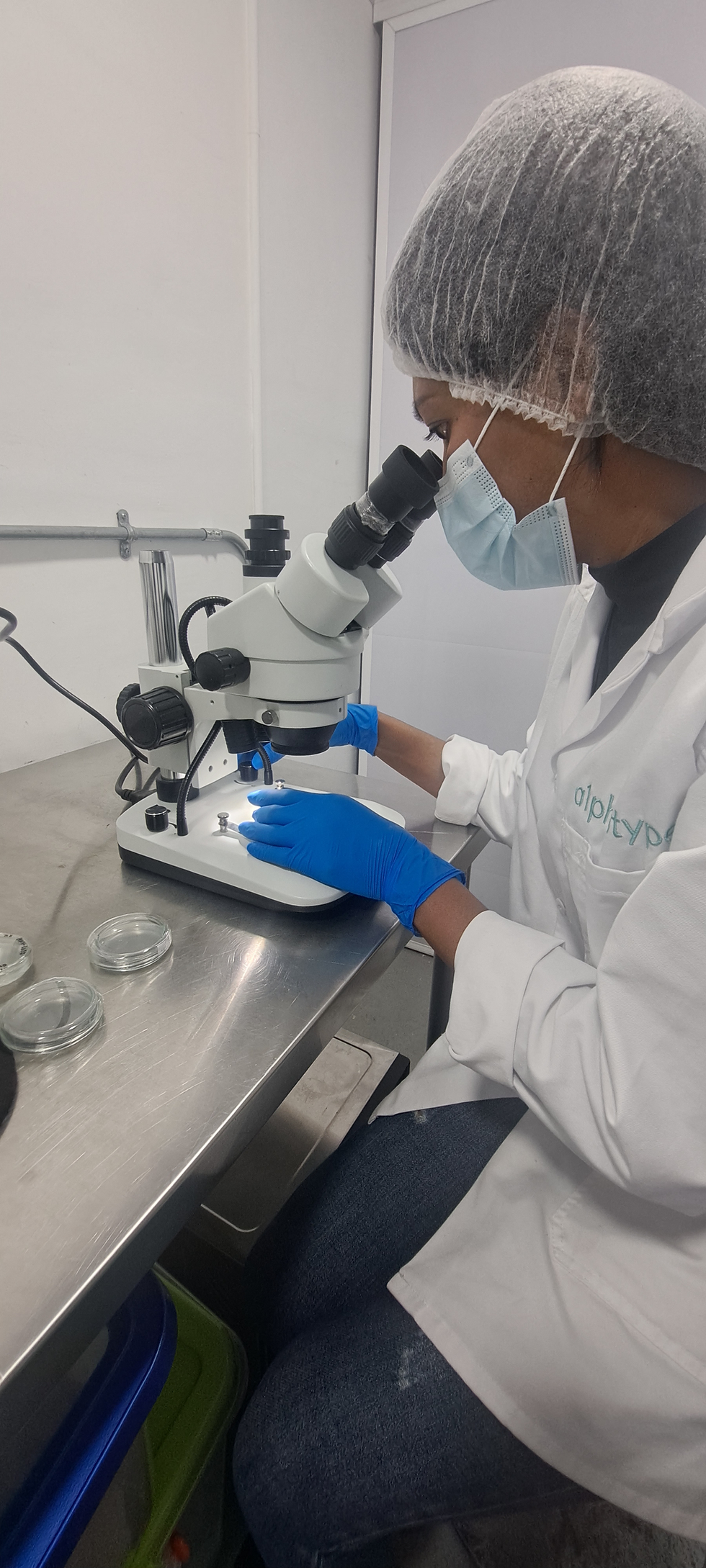
Understanding Organogenesis vs. Embryogenesis
While somatic embryogenesis offers maximum multiplication potential, direct organogenesis provides distinct advantages for commercial cannabis propagation:
Direct Organogenesis Characteristics:
Shoots develop directly from organized tissue (no callus intermediate)
Maintains photosynthetically active, green tissue throughout culture
Faster progression from explant to rooted plantlet (8-12 weeks)
Lower risk of somaclonal variation (genetic changes)
More predictable outcomes across diverse cultivars
Easier protocol standardization for commercial production
Somatic Embryogenesis Characteristics:
Maximum multiplication capacity (1,000+ plants per explant)
Requires callus phase (slower, 12-18 weeks total)
Higher technical complexity and genotype dependency
Greater scalability once protocols are optimized
Ideal for mass propagation and long-term preservation
Strategic Application
Alphatype employs both methods strategically:
Direct Organogenesis For:
Time-sensitive commercial orders requiring rapid turnaround
Cultivars with recalcitrant embryogenesis response
Routine maintenance propagation of Alexandria biobank
Client projects requiring immediate genetic fidelity assurance
Training new laboratory personnel (more forgiving protocols)
Somatic Embryogenesis For:
Large-scale propagation projects (10,000+ plants)
Long-term cryopreservation and genetic banking
Research cultivars requiring extensive multiplication
Maximum space efficiency in production facilities
Advanced breeding program applications
Meristem Culture: Foundation of Organogenesis
The Science of Meristems
Meristems are regions of actively dividing, undifferentiated plant cells located at growing points—shoot tips (apical meristems) and lateral buds (axillary meristems). These tissues possess unique properties ideal for micropropagation:
Advantages of Meristem Tissue:
Genetic Stability:
Cells have undergone fewer divisions than mature tissue
Lower mutation accumulation compared to callus cultures
Maintains true-to-type characteristics of mother plant
Pathogen-Free Status:
Rapid cell division outpaces most viral replication
Systemic pathogens rarely present in meristem dome
Produces clean stock for disease-free propagation
High Regeneration Capacity:
Naturally programmed for shoot formation
Responds predictably to cytokinin stimulation
Reliable across most cannabis genotypes
Organized Structure:
Maintains tissue organization (no dedifferentiation)
Green, leafy appearance throughout culture cycle
Direct transition from explant to plantlet
Explant Selection & Preparation
Source Material:
Apical Meristems:
Harvested from actively growing shoot tips
Size: 0.5-2.0 mm (meristem dome + 2-3 leaf primordia)
Best for establishing new culture lines
Highest pathogen-free guarantee
Axillary Meristems:
Lateral buds from nodal segments
Size: 1-3 mm (includes bud and small leaf base)
Ideal for routine multiplication
Higher initial success rates
Sterilization Protocol:
Step 1: Initial Rinse
Wash explants with mild detergent solution (Tween-20, 0.1%)
Remove surface debris and dust
Duration: 5 minutes with gentle agitation
Step 2: Ethanol Dip
70% ethanol immersion
Duration: 30-60 seconds
Removes waxy cuticle, enhances penetration of sterilant
Step 3: Sodium Hypochlorite Treatment
1.5-2.0% active chlorine (diluted commercial bleach)
Duration: 10-15 minutes depending on tissue type
Kills surface bacteria and fungal spores
Step 4: Sterile Rinses
Three sequential rinses with sterile distilled water
5 minutes each rinse
Removes residual sterilant
Step 5: Aseptic Trimming
Under laminar flow hood, remove outer damaged tissue
Reduce to final explant size (0.5-1.5 mm)
Place immediately on culture media
Direct Organogenesis Protocol
Phase 1: Shoot Initiation (Weeks 0-3)
Media Composition:
Base: Modified MS formulation with full-strength nutrients
Growth Regulators - Shoot Induction:
BAP (Benzylaminopurine): 2.0-4.0 mg/L (high cytokinin)
NAA (Naphthaleneacetic acid): 0.1-0.5 mg/L (low auxin)
Cytokinin:Auxin ratio: 8:1 to 40:1 (favors shoot formation)
Additional Components:
Sucrose: 30 g/L
Agar: 7 g/L
Activated carbon: None (allows full hormone effect)
pH: 5.7-5.8
Environmental Conditions:
Temperature: 24 ± 1°C
Photoperiod: 16-hour light / 8-hour dark
Light intensity: 75-100 μmol m⁻² s⁻¹
Expected Outcomes:
Week 1: Explant greening and swelling
Week 2: Multiple shoot primordia visible (2-5 shoots per explant)
Week 3: Shoots 5-15 mm tall, ready for multiplication or rooting
Success Rate: 80-95% of explants produce shoots (cultivar-dependent)
Phase 2: Shoot Multiplication (Weeks 3-9)
Subculture Cycle: Every 3-4 weeks
Multiplication Strategy:
Each shoot cluster divided into individual shoots
Shoots with 2-3 nodes selected for subculture
Each shoot can produce 3-6 new shoots per cycle
Multiplication rate: 3-6× per 3-week cycle
Media Composition:
Same as shoot initiation media
Some cultivars benefit from reduced BAP (1.5-3.0 mg/L) for elongation
May add GA₃ (gibberellic acid) 0.1-0.5 mg/L to prevent rosetting
Quality Control:
Monitor shoot height and vigor
Eliminate hyperhydric ("glassy") shoots
Watch for leaf abnormalities (indication of stress)
Document proliferation rates per cultivar
Multiplication Efficiency:
Cycle 1: 5 shoots → 15-30 shoots
Cycle 2: 30 shoots → 90-180 shoots
Cycle 3: 180 shoots → 540-1,080 shoots
12 weeks total: Single explant → 500-1,000+ shoots
Phase 3: Rooting & Acclimatization (Weeks 10-14)
Rooting Media:
Growth Regulator Shift:
Remove cytokinin completely (BAP = 0 mg/L)
Increase auxin: IBA or NAA at 0.5-2.0 mg/L
Low auxin:cytokinin ratio triggers root formation
Alternative Rooting Methods:
Ex Vitro Rooting (Preferred for Cannabis):
Transfer shoots directly to greenhouse humidity domes
Treat stem base with rooting gel/powder (IBA 0.1-0.3%)
Plant in sterile rooting substrate (perlite:peat 1:1)
Maintains natural root architecture
Reduces production time by 2-3 weeks
In Vitro Rooting:
Culture on low-auxin media for 2-3 weeks
Roots develop inside culture vessel
Requires additional acclimatization step
Better for challenging-to-root cultivars
Acclimatization Protocol:
Week 1: High humidity (90-95%), low light, enclosed environment
Week 2: Gradually reduce humidity (80-85%), increase light
Week 3: Further humidity reduction (70-75%), introduce air circulation
Week 4: Standard greenhouse conditions (60-70% RH), full light
Success Rate: 85-95% of rooted shoots survive acclimatization
Current Research: Protocol Optimization
Genotype-Specific Response Testing
Challenge: Cannabis cultivars show variable responses to organogenesis protocols. What works for one Alexandria accession may be suboptimal for another.
Research Approach:
Screening Protocol: Testing 50 representative cultivars from Alexandria collection across:
BAP concentrations: 1.0, 2.0, 3.0, 4.0, 5.0 mg/L
NAA concentrations: 0.0, 0.1, 0.3, 0.5 mg/L
20 treatment combinations per cultivar
Data Collection:
Shoot induction frequency (% explants forming shoots)
Number of shoots per explant
Shoot length and quality
Multiplication rate per subculture cycle
Rooting efficiency
Expected Outcomes:
Develop cultivar-specific protocol recommendations
Create decision matrix for optimal hormone combinations
Reduce trial-and-error time for new accessions
Hyperhydricity Prevention
Problem: "Glassy shoots" or hyperhydric tissue—water-logged, translucent shoots with poor vigor and low survival rates. This physiological disorder affects 10-20% of cultures in some cultivar lines.
Contributing Factors:
Excessive humidity inside culture vessels
High cytokinin concentrations
Low light intensity or poor spectral quality
Inadequate vessel ventilation
High water content in gelling agent
Solutions Under Investigation:
Vessel Modification:
Testing breathable closures (gas-permeable membranes)
Reducing headspace humidity through vent placement
Increasing air exchange rates
Media Adjustments:
Increasing agar concentration (8-9 g/L vs. standard 7 g/L)
Adding osmotic agents (sorbitol, mannitol)
Reducing cytokinin by 20-30% once shoots are established
Environmental Optimization:
Increasing light intensity to 100-125 μmol m⁻² s⁻¹
Optimizing LED spectral ratios (red:blue)
Improving air circulation in growth rooms
Preliminary Results: Breathable closures + increased agar reduced hyperhydricity by 60%
Quality Assurance & Genetic Fidelity
Maintaining True-to-Type Genetics
Subculture Limitations: To minimize somaclonal variation risk, we enforce strict passage number limits:
Maximum Subculture Cycles:
Standard protocol: 6-8 cycles maximum before restarting from fresh explant
High-value cultivars: 4-5 cycles maximum
Research lines: Molecular verification every 10 cycles
Morphological Screening: Every subculture cycle includes visual assessment for:
Leaf shape and serration patterns
Internode length
Shoot color and texture
Growth rate anomalies
Any "off-type" characteristics
Molecular Verification:
SSR (microsatellite) marker profiling: Annual verification
SNP genotyping: New accessions and suspected variants
Flow cytometry: Ploidy confirmation for polyploidy research integration
Contamination Management
Contamination Sources:
Endophytic bacteria (internal to plant tissue)
Surface fungi surviving sterilization
Airborne contaminants during transfer operations
Cross-contamination between culture vessels
Prevention Strategies:
Enhanced Sterilization:
Extended sodium hypochlorite exposure for recalcitrant explants
Addition of PPM (Plant Preservative Mixture) to media: 0.05-0.1%
Prophylactic antibiotics for endophyte-prone cultivars
Aseptic Technique:
Regular laminar flow hood certification
UV sterilization between work sessions
Alcohol flame sterilization of instruments
Operator training and competency assessment
Environmental Controls:
HEPA-filtered culture rooms (ISO Class 7-8)
Positive pressure differentials
Temperature precision (24±1°C prevents condensation)
Current Performance: <3% contamination rate across all organogenesis cultures
Commercial Applications
Alexandria Biobank Maintenance
Routine Propagation:
1,500+ cultivars maintained in active culture
Rotating propagation schedule ensures continuous availability
Each cultivar subcultured every 3-4 weeks
Backup cultures maintained for security
Space Efficiency:
Single culture vessel (500 mL): 20-30 shoots
Standard growth room (30 m²): 2,000-3,000 vessels
Capacity: 40,000-90,000 shoots in active multiplication
Equivalent to maintaining 10,000+ mother plants in traditional systems
Cost Reduction:
No soil, pots, or extensive irrigation infrastructure
Minimal pest/disease management (sterile environment)
Year-round production (climate-independent)
Operational savings: 60-70% vs. conventional stock plant maintenance
Silverstone F1 Hybrid Production Support
Parent Line Multiplication:
Rapid scale-up of selected inbred parents
Genetic uniformity critical for F1 hybrid consistency
On-demand production matching breeding schedules
Clonal Seed Production: When F1 parents must be maintained clonally:
Tissue culture eliminates virus accumulation
Maintains juvenile characteristics
Produces pathogen-free stock for seed production fields
Custom Propagation Services
Client Applications:
Large-scale cultivar orders (5,000-50,000 plants)
Genetic rescue of rare/endangered cultivars
Pathogen elimination (virus indexing + meristem culture)
International distribution (tissue culture = compact, quarantine-friendly)
Turnaround Times:
Standard orders: 12-16 weeks from explant to acclimatized plant
Rush orders: 10-12 weeks with expedited subcultures
Maintenance contracts: Continuous supply on monthly schedules
Integration with Other Research Programs
Synergy with Embryogenesis Research
Complementary Protocols:
Organogenesis provides reliable production while embryogenesis scales
Recalcitrant cultivars use organogenesis; responsive lines use embryogenesis
Organogenesis-derived shoots can be converted to embryogenic callus
Both protocols share media preparation and sterile facilities
Supporting Polyploidy Research
Explant Source:
Polyploid shoots from colchicine treatments enter organogenesis multiplication
Direct organogenesis preserves polyploid status without reversion
Allows rapid scaling of confirmed polyploid lines
Phenotyping Platform
In Vitro Trait Assessment:
Shoot cultures allow controlled environment screening
Test stress responses (salinity, temperature, drought simulation)
Cannabinoid/terpene production in culture
Early selection before field trials
Key Performance Indicators
Metric | Current | Target | Status |
Shoot Induction Rate | 80-95% | >90% | ✓ On Target |
Multiplication Rate | 3-6× per cycle | 4-8× | ⟳ Optimizing |
Contamination | <3% | <2% | ✓ Exceeding |
Rooting Success | 85-95% | >90% | ✓ On Target |
Acclimatization Survival | 85-95% | >90% | ✓ On Target |
Production Time | 12-16 weeks | <12 weeks | ⟳ Improving |
Cost per Plant | $1.50-2.50 | <$1.50 | ⟳ Scaling |
Genetic Fidelity | >99% | >99.5% | ✓ Verified |
Conclusion
Direct organogenesis via meristem culture provides Alphatype with a robust, reliable platform for commercial-scale cannabis micropropagation. This proven technology complements our advanced embryogenesis research, offering production flexibility and genetic fidelity assurance across diverse applications.
The maintenance of parallel propagation systems—organogenesis for speed and reliability, embryogenesis for maximum scale—positions Alphatype to meet varied client needs while advancing the frontiers of cannabis biotechnology. Our systematic approach to protocol optimization, quality assurance, and genetic verification ensures that every plant produced meets the highest standards of genetic authenticity and commercial viability.
As we continue refining protocols and expanding our production capacity, direct organogenesis remains the backbone of Alexandria biobank operations and a critical tool supporting Silverstone breeding innovations.


